

Not every childhood wound can be seen. Some are carried quietly into adulthood beneath outward strength. Parental rejection can influence self-worth, relationships, responses to failure, and a person’s understanding of God’s love.
Many readers search for a Toxic Parents Book because they want to understand why childhood pain still shapes adult life. They may also compare books dealing with rejection from parents, hoping to find language for a wound they have struggled to explain.
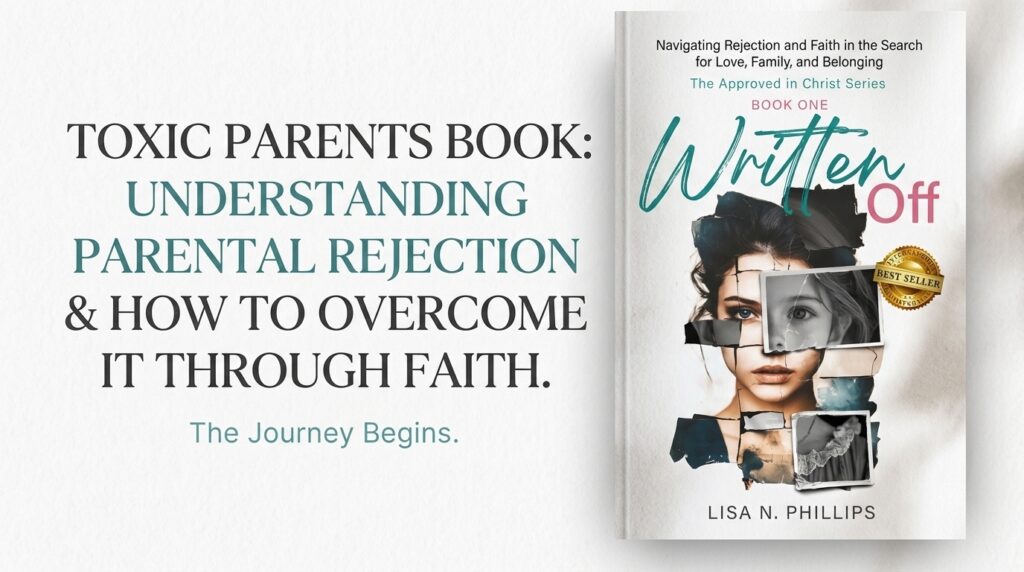
In Written Off: The Journey Begins, I share my journey through parental rejection, family estrangement, fear, faith, and restoration.
Children naturally look to their parents for affection, protection, acceptance, and approval. A parent’s response helps a child understand whether they are loved, valued, and secure.
When a parent repeatedly withdraws, criticizes, dismisses, or rejects, a child often assumes the problem is within them. They may conclude, “I am unwanted,” “I am difficult to love,” or “I am not good enough.”
Those beliefs can produce perfectionism, insecurity, fear of failure, and people-pleasing. In my own life, I tried to become the “good daughter,” believing this would finally earn acceptance.
The parental blessing is more than food, shelter, education, or material support. Children also need affirming words, appropriate affection, emotional connection, approval, and assurance that they have a secure place in the family.
In Written Off, blessing is described as a parent stepping toward a child with love, acceptance, and value. When a parent steps back emotionally or relationally, something essential is withheld.
That absence may follow a person into adulthood. An adult child may overachieve, remain preoccupied with a parent’s opinion, or return to a painful relationship hoping to hear, “I love you,” “I am proud of you,” or “You belong.”
The effects of rejection are not always obvious. A person may be dependable, successful, and outwardly confident while privately battling low self-esteem and self-doubt.
Childhood rejection may appear as fear of mistakes, difficulty trusting decisions, guilt over family conflict, an inability to express needs, approval-seeking, or fear of abandonment.
These are often survival patterns formed in an emotionally unsafe environment. Naming them is not adopting a victim identity. It is recognizing what happened so the wound no longer controls decisions from the shadows.
A child who learned that love was unpredictable may enter adulthood expecting closeness to end in disappointment. They may struggle to trust, avoid vulnerability, or tolerate unhealthy behavior because losing the relationship feels more frightening than remaining in it.
Others become people-pleasers in friendships or marriage. They silence their preferences, over-apologize, or believe they must prove their value. Boundaries may feel cruel or disloyal, especially when relatives use guilt or pressure to resist them.
Family estrangement adds another layer of grief. An adult child may continue hoping for reconciliation even after repeated rejection. That hope is understandable, but healing also requires wisdom about what is emotionally and spiritually safe.
Early experiences with parents can influence how we imagine God. A rejecting, critical, or unpredictable parent may make God seem distant, disappointed, or difficult to please. A person may believe divine love must also be earned.
Scripture promises may be easy to read but difficult to receive personally. The words say God is loving, yet the wounded heart expects Him to step back.
Faith became a lifeline in my journey. God’s truth challenged the belief that another person’s rejection had authority to define me. Healing involved learning to see God through His character, promises, and the secure identity offered in Christ.
Learning how to overcome childhood rejection does not begin with pretending it never happened. Biblical healing begins with truth. It allows us to acknowledge the wound, grieve what was missing, and separate our God-given worth from a parent’s behavior.
Healing may include identifying beliefs such as “I must earn love” or “My needs do not matter” and replacing them with truth. It may also require emotional and spiritual boundaries, prayer, Scripture, journaling, and support from trusted people.
Pastors, mature Christian mentors, and qualified counselors can help people process complex family pain. Seeking support is not a failure of faith. It can be a wise step toward confidence and healthier relationships.
Rejection often travels through generations when wounds remain unexamined. Parents may repeat patterns from their own childhood without recognizing what they are passing forward.
Understanding the origin of harmful behavior provides context, but it does not excuse the harm. Breaking the pattern requires honest recognition, personal responsibility, and a deliberate choice to respond differently.
Adults can interrupt generational rejection by giving their children affection, affirming words, emotional safety, thoughtful correction, and dependable belonging. One person’s decision to heal can change an entire family.
Written Off is not only an advice-centered Toxic Parents Book. It is a memoir grounded in lived experience, biblical reflection, and the reality of longing for family connection while recognizing the need for truth and boundaries.
Among books dealing with rejection from parents, it explores the parental blessing, people-pleasing, fear of failure, estrangement, generational pain, prayer, counseling, spiritual strongholds, and identity in Christ.
The book neither minimizes rejection nor reduces complicated family members to simple labels. It holds pain and compassion together while encouraging readers to move beyond an identity built around what another person withheld.
Written Off may speak to adults processing childhood rejection, emotional distance, family estrangement, perfectionism, people-pleasing, fear of failure, abandonment, or difficulty making confident decisions.
Christians who struggle to understand God as a loving Father may recognize themselves in these pages. Parents, coaches, ministry leaders, and mentors may also gain insight into why affirmation, emotional safety, and the parental blessing matter.
Above all, the book is for readers who have felt unseen, unheard, undervalued, or written off and are ready to believe rejection does not have to become their permanent identity.
Childhood rejection may influence your story, but it does not have to control your future. Healing begins when pain is acknowledged and personal worth is separated from a parent’s choices or limitations.
For those searching for how to overcome childhood rejection, the journey may include faith, boundaries, grief, reflection, counseling, supportive relationships, and time. Progress is rarely immediate, but restoration is possible.
Written Off: The Journey Begins offers understanding and hope to readers seeking a compassionate Toxic Parents Book rooted in lived experience and biblical truth. What was missing may have been significant, but it is not greater than God’s ability to restore identity, renew hope, and lead a wounded heart toward acceptance, belonging, and wholeness.