
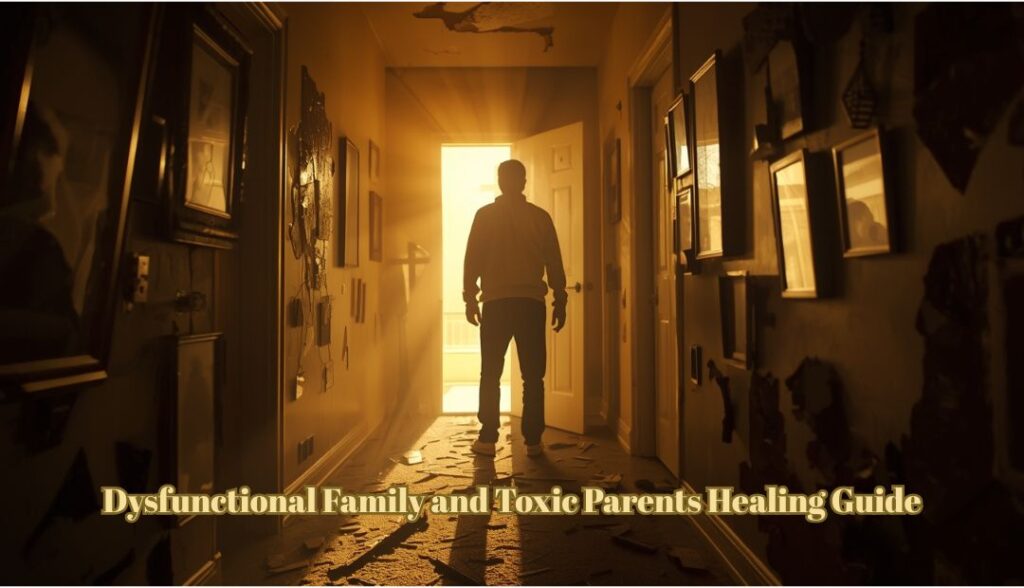
A dysfunctional family is not defined by occasional conflict—it is characterized by persistent patterns of unhealthy behavior that disrupt emotional stability, communication, and personal development. In many cases, these environments normalize emotional invalidation, rejection, control, or neglect, leaving children without the foundational support needed to develop a strong sense of identity.
Emotional invalidation occurs when a child’s thoughts, feelings, or experiences are dismissed or minimized. Over time, this creates internal confusion: “Am I wrong for feeling this way?” Rejection—whether overt or subtle—reinforces a belief of unworthiness. When these patterns persist across generations, they become generational wounds, silently shaping belief systems, behaviors, and relational dynamics.
The long-term effects are significant:
For many adults in the United States, these patterns carry into professional life, affecting leadership, decision-making, healthy work relationships, emotional resilience, and being paralyzed in dysfunctional or distorted thinking. Understanding the root is the first step toward transformation.
Toxic parents are not simply strict or flawed—they consistently engage in behaviors that harm a child’s emotional and psychological well-being. These behaviors often go unrecognized because they are normalized within the family structure.
Common signs include:
Children raised in such environments often internalize these behaviors, leading to:
In a high-performance, results-driven U.S. culture, these unresolved issues can manifest as burnout, imposter syndrome, or chronic dissatisfaction—despite external success.
Dysfunctional family books play a critical role in bridging awareness and transformation. For many individuals, these resources provide language for experiences they have never been able to articulate.
The healing journey typically follows three stages:
Well-written books in this category go beyond storytelling—they provide frameworks, emotional validation, and actionable pathways for change. They empower readers to move from victimhood to ownership, which is essential for lasting growth.
Within the broader category of toxic parents books, faith-based resources offer a unique advantage: they address both emotional wounds and spiritual identity. They don’t just explain pain—they provide a pathway to redemption, restoration, and purpose.
One standout work in this space comes from Lisa N. Phillips, whose personal and professional background uniquely positions her as both a guide and a credible voice in healing from family dysfunction.
Written Off: Navigating Rejection and Faith in Search for Love, Family, and Belonging is more than a memoir—it is a structured journey through emotional pain toward spiritual restoration.
Lisa’s story is rooted in real-life experiences of childhood rejection and emotional invalidation. She does not generalize the problem; she articulates it with precision:
What sets this work apart is the turning point: faith. Through a Christ-centered lens, Lisa demonstrates how truth dismantles false identity and distorted thinking and replaces it with purpose, clarity, and emotional freedom.
Her dual perspective—as someone who lived through dysfunction and now coaches children in mental wellbeing and mindset development—adds a level of credibility aligned with Google’s E-E-A-T standards. This is not theoretical insight; it is lived experience combined with applied expertise.
Christian spiritual growth is often misunderstood as purely theological or devotional. In reality, it is deeply connected to emotional healing. Unresolved wounds distort how individuals perceive God, themselves, and others.
Healing becomes a prerequisite for growth.
From a biblical standpoint:
For individuals recovering from dysfunctional family environments, this shift is critical. Without addressing emotional wounds, spiritual growth remains limited, often constrained by subconscious patterns of fear, self-doubt, low self-confidence, people-pleasing, and other dysfunctional behaviors, and unworthiness.
Lisa’s work aligns with this principle—integrating faith with emotional restoration, creating a holistic pathway forward.
Christian spiritual growth books provide structured guidance for breaking cycles that often feel permanent. These cycles—distorted thinking, fear of failure, fear of continued rejection, a poorly defined identity—are not just behavioral; they are deeply embedded belief systems.
Effective books in this category focus on:
This is particularly relevant in today’s U.S. landscape, where mental health awareness is rising, but many still seek solutions that don’t integrate faith with practical application.
Lisa’s approach stands out because it combines:
This combination allows readers not only to understand their past but to actively reshape their future and embrace peace—whether relationships are healed and restored with toxic parents or not.
Healing is not passive—it requires intentional, consistent action. A faith-based approach provides both structure and meaning to this process.
Here are practical steps grounded in both psychological insight and Christian principles:
Forgiveness is not about excusing harmful behavior; it is about releasing its control over your life. It creates emotional space for healing.
Identify and challenge false beliefs such as:
Replace them with truth-based affirmations rooted in Scripture.
Boundaries are essential for emotional health. They define what is acceptable and protect your progress.
Healing often requires surrender—trusting that God can restore what was broken, even when the process is uncomfortable or unclear.
These steps are not linear; they require repetition and commitment. However, when applied consistently, they lead to measurable transformation in both personal and professional life.
Healing from a dysfunctional family and toxic behaviors from parents is one of the most challenging journeys an individual can undertake—but it is also one of the most transformative.
Faith introduces a powerful truth: your past does not define your future.
Through resources like Written Off and the broader category of Christian spiritual growth books, individuals can:
Lisa N. Phillips exemplifies what it means to turn pain into purpose. Her work not only educates—it empowers, positioning her platform as a thought leader in faith-based emotional healing.
For those seeking lasting transformation, the message is clear: healing is possible, restoration is real, and freedom is within reach through Christ-centered growth.